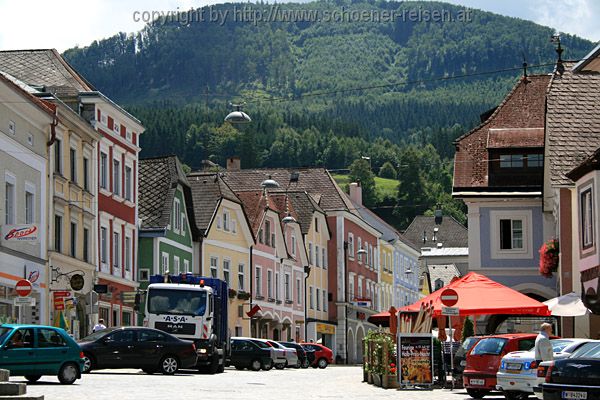
It's hard for me to believe that with so many great words in the German language, I've yet to devote an entire post to explaining one word. But here goes:
Like many useful German words,
gemütlichkeit has no real equivalent in English. It refers to a lifestyle that is some combination of comfort, coziness, relaxation, sociability, and enjoyment, mixed, perhaps, with a touch of laziness. Overall it's a very foreign idea to Americans, who tend to value things like work, stress, meritocracy, very short lunch breaks, and
insanely large cups of coffee.
 |
Living in Austria has sapped some of my motivation, except
when it comes to blogging and napping. |
To me,
gemütlichkeit is one of the defining characteristics of Austrian culture; it also constitutes a major difference between Austria and a certain larger, less-Catholic German-speaking country in the neighborhood. In fact, Austria is like a much snowier version of Spain, with many Austrian shops and businesses closing for several hours in the middle of the day for employees to take a break (although
ritualistic napping is much less prevalent here). Even some smaller cafes in Waidhofen close their doors between twelve and three in the afternoon, which you don't need to be an associate at the Boston Consulting Group to realize is not the best business strategy for a lunch place.
Then again, maximizing profits is not as emphasized in Austria as in the US - one Viennese entrepreneur named Richard Lugner, most famous for bringing hot American celebrities to the annual Opera Ball, appears to be
the only Austrian who realizes or even cares how much money you could make be increasing the opening hours of shopping centers and grocery stores. The Austrian Catholic Church, trade unions, and 81% of the Austrian population want nothing to do with commerce on Sundays.
Gemütlichkeit is also an especially pervasive attitude in the schools where I work. Teachers are known for being >5 minutes late to their own classes ("I had to finish my coffee, it's not healthy to chug...") and students tend to be mysteriously ill on days when they are meant to make presentations. Overall schools here are much more relaxed than in America, as I am frequently reminded on days when my classes are canceled because the students have unexpectedly all gone to the movies or are off on a multi-day ski trip.
What's remarkable about Austria's
gemütlichkeit is that, despite the fact that all employees enjoys a
bare minimum of five weeks paid vacation per year (unvorstellbar in America!), plus thirteen paid public holidays, society still runs smoothly. Unlike in Greece or Italy, trains are on time, garbage is picked up regularly, and even the employees at the tax office are helpful (assuming you visit them during the 25 hours per week that they're actually open). Relaxation, apparently, does not impair efficiency. Nor does drinking
13 liters of pure alcohol per year or
retiring at age 58
Austria proves that a society's quality of life can be extremely high, despite stress levels that are significantly lower than in America, where recent college grads have been known to to work 70 hours per week without any days off for several months unpaid for the sake of "experience."
* In fact, this stress differential may be why Austrians can eat so much fried food, cured meat, and saturated fat, yet still have a much lower incidence of heart disease than Americans. Just a theory...
*q.v. Gabbi Greenfield's life